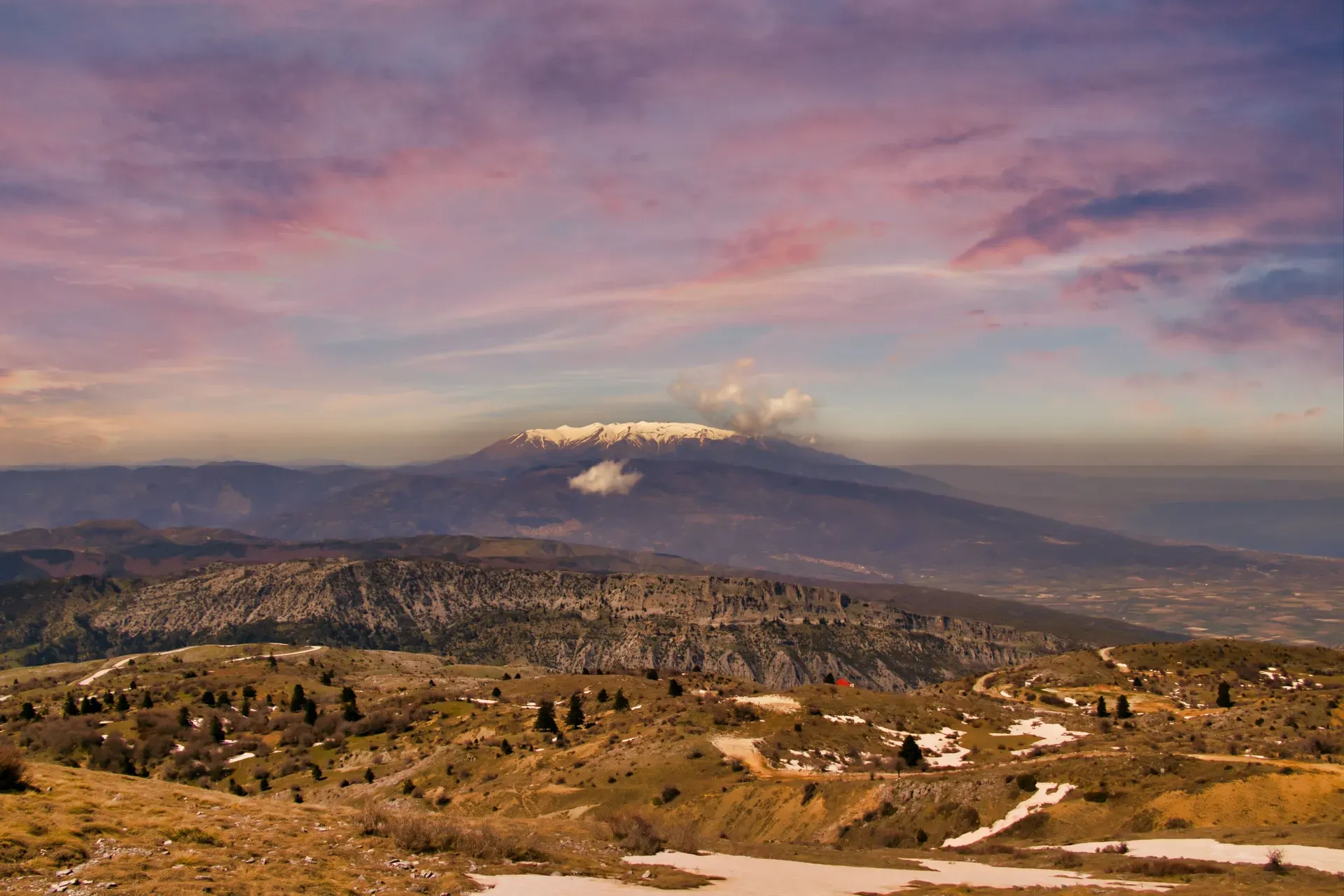
Scramble up Mytikas at 2,917.727 m — the highest point in Greece — past the rock fin ancient climbers named the Throne of Zeus, with views sweeping over the Thermaic Gulf to the sea. Below the summit, 52 peaks, the waterfall pools of Enipeas Gorge and roughly 1,700 plant species fill a UNESCO-listed national park that costs nothing to enter.
Find Guided ToursThe highest mountain in Greece rises straight off the Aegean coast, a massif of 52 peaks and deep gorges on the border between Thessaly and Macedonia, about 80 km southwest of Thessaloniki. The summit, Mytikas, reaches 2,917.727 m — the roof of Greece, and in myth the seat of Zeus and the twelve Olympian gods. The gateway town is Litochoro, at the mountain's foot.
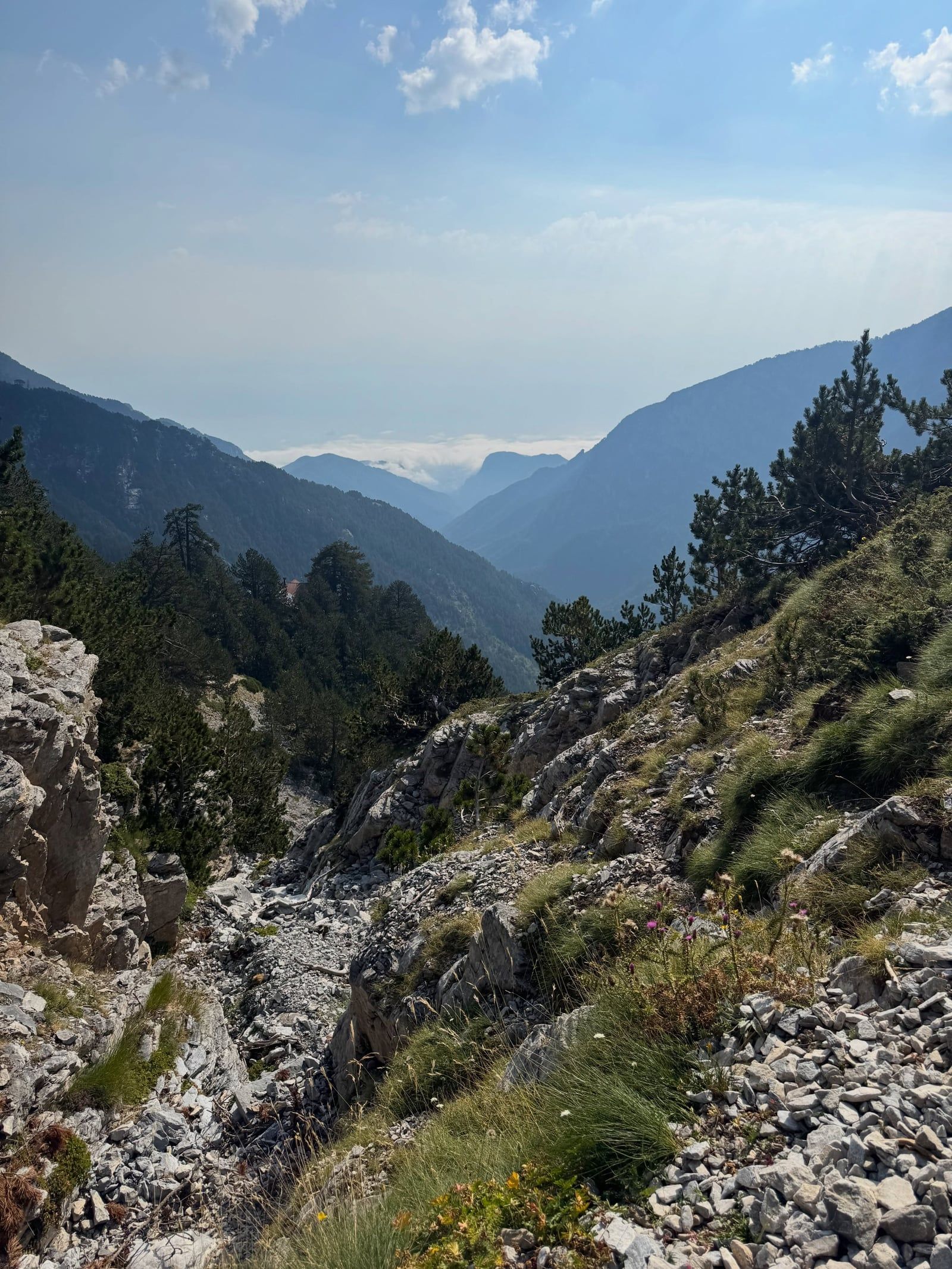
The massif is built of sedimentary rock and was carved by glaciers over a million years ago. That history shows in the terrain: Enipeas Gorge cuts deep through the lower slopes, and the 52 peaks stack vegetation in bands, from Mediterranean woodland at the bottom, up through beech, fir and black-pine forest, to Bosnian pine and then bare alpine ground above roughly 2,500 m. The national park's core covers 24,000 hectares and holds around 1,700 plant species and subspecies — about a quarter of all Greek flora, including endemics like Jankaea heldreichii. Wolves, chamois, wild boar and golden eagles live here too.
The mountain's human history runs just as deep. At Dion, a sacred city at its foot, the Macedonians worshipped Zeus; King Archelaus (r. 414-399 BC) held nine days of games in the god's honour there, and the city flourished from the 5th century BC to the 5th century AD. Mytikas itself was long thought unclimbable — until 2 August 1913, when Litochoro hunter Christos Kakkalos guided Swiss alpinists Frédéric Boissonnas and Daniel Baud-Bovy to the top. Kakkalos became the mountain's first official guide in 1932.
Protection followed. Greece made Olympus its first national park in 1938, UNESCO named it a Biosphere Reserve in 1981, and on 26 July 2026 it was inscribed on the World Heritage List as a mixed cultural and natural site. That's rare company for a mountain. The Hellenic Train from Thessaloniki to Litochoro takes about an hour and ten minutes and costs €9 — the easiest way in.
Discover the full history and cultural significance on our About page.
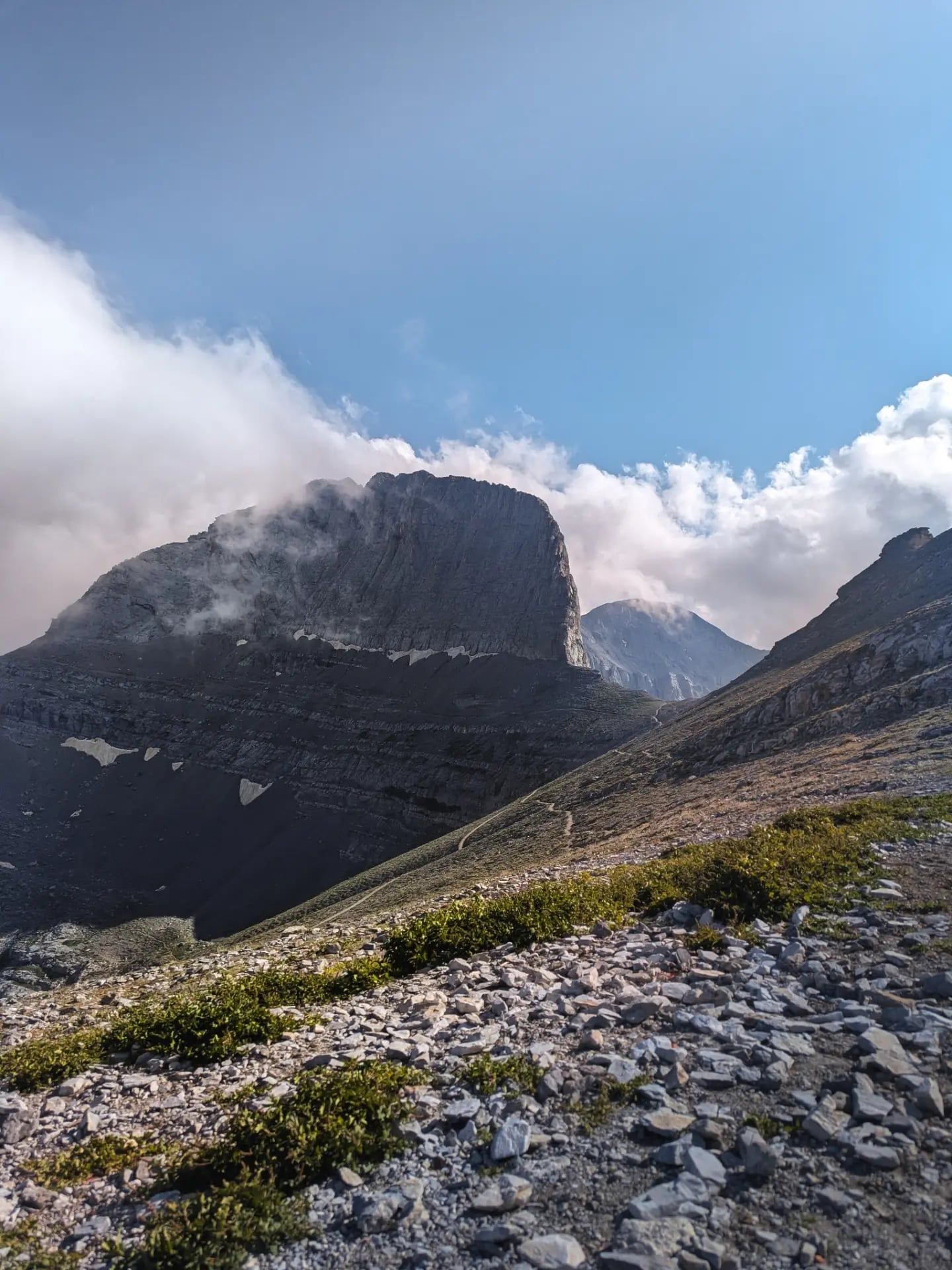
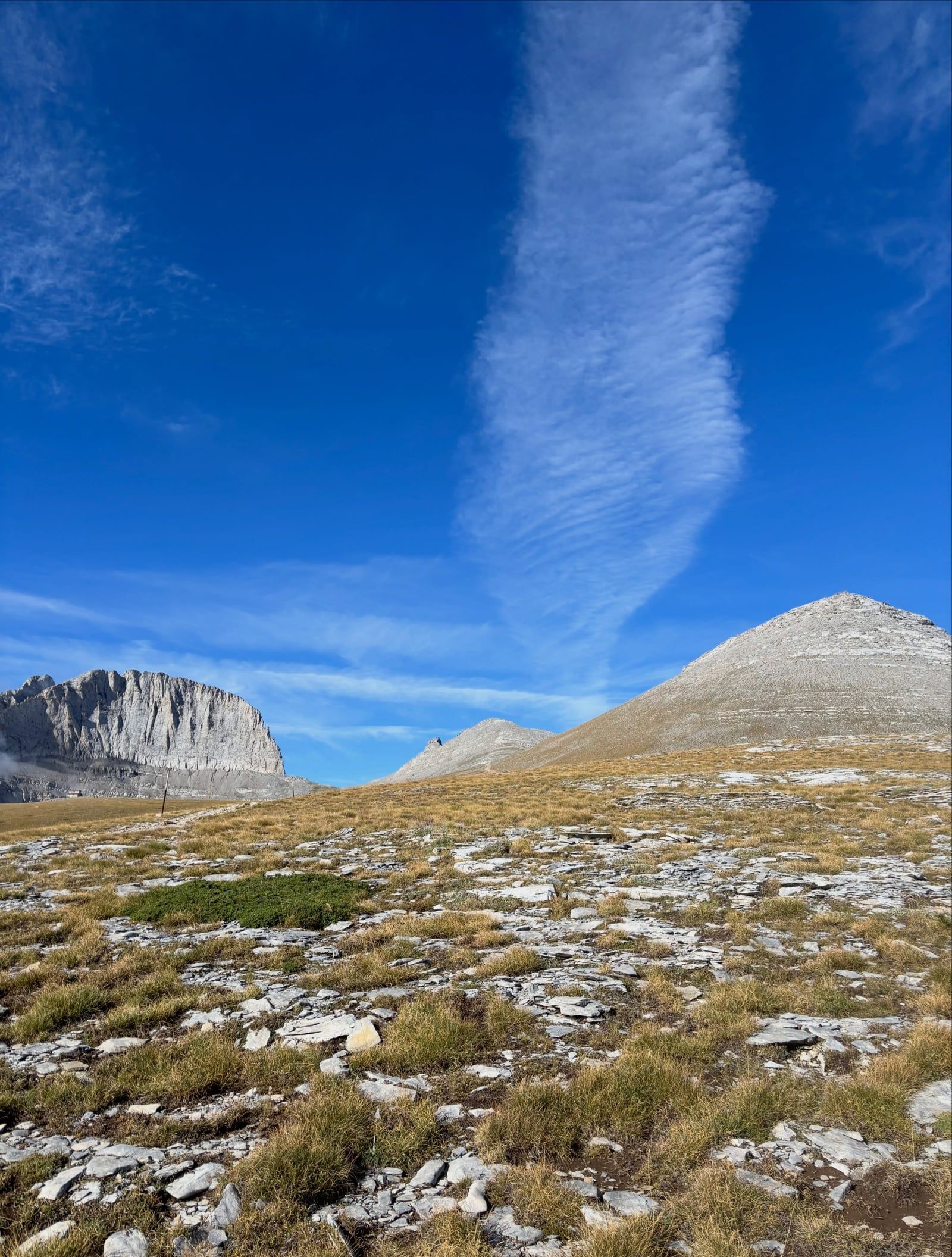
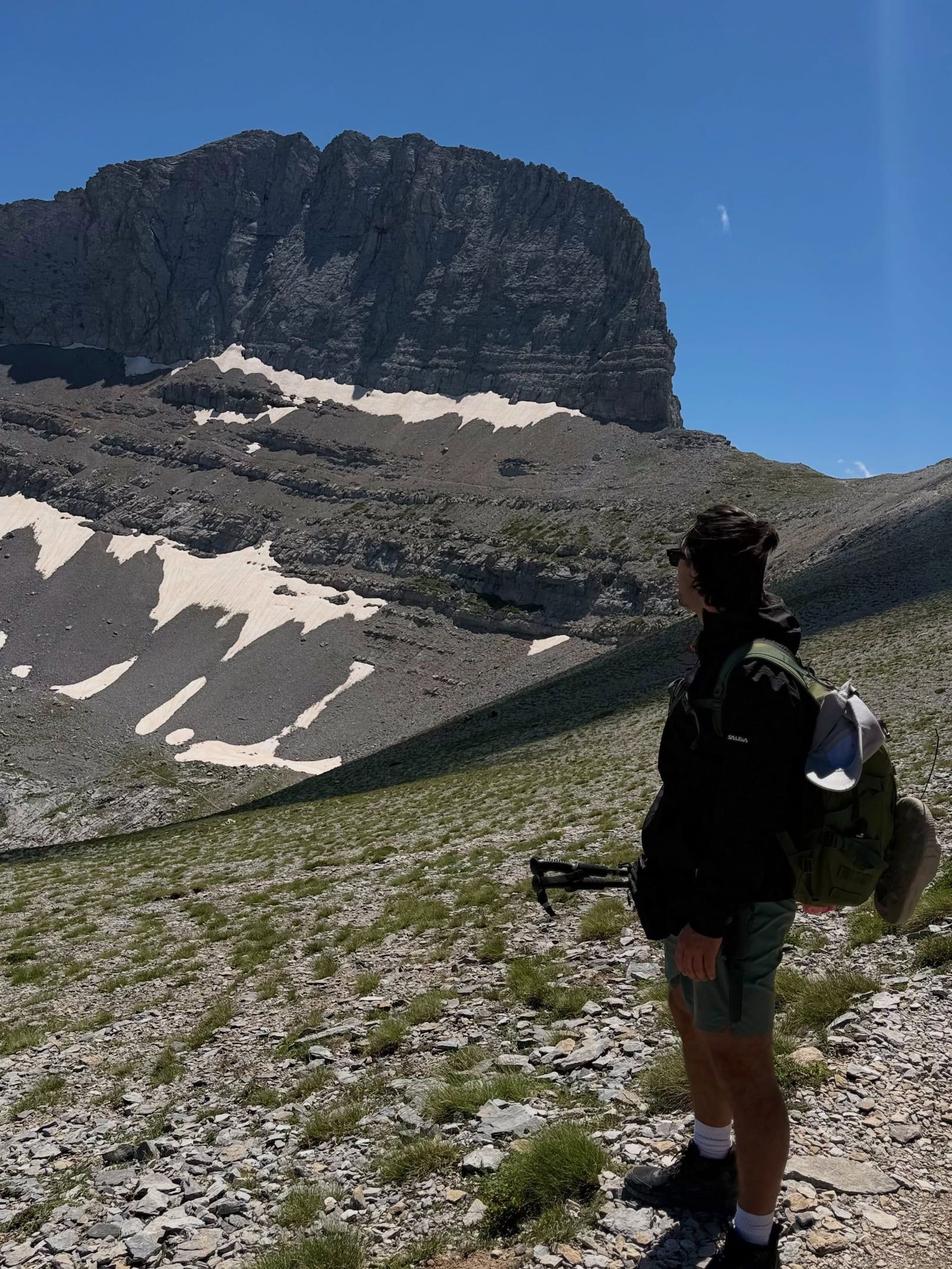
Mytikas reaches 2,917.727 m, and the ancients called it 'Pantheon' — the gods' meeting place. The final scramble from the Skala col crosses polished, exposed rock, first climbed on 2 August 1913. On clear days the view sweeps over the Thermaic Gulf and the Pieria coast.
Spilios Agapitos Refuge sits on the E4 route with 110 beds, 14 rooms and a restaurant open until 21:00. Watch the sun sink over the Aegean from the terrace, then sleep under three wool blankets (bring a liner — there are no sheets). Beds cost €18; book ahead for July and August.
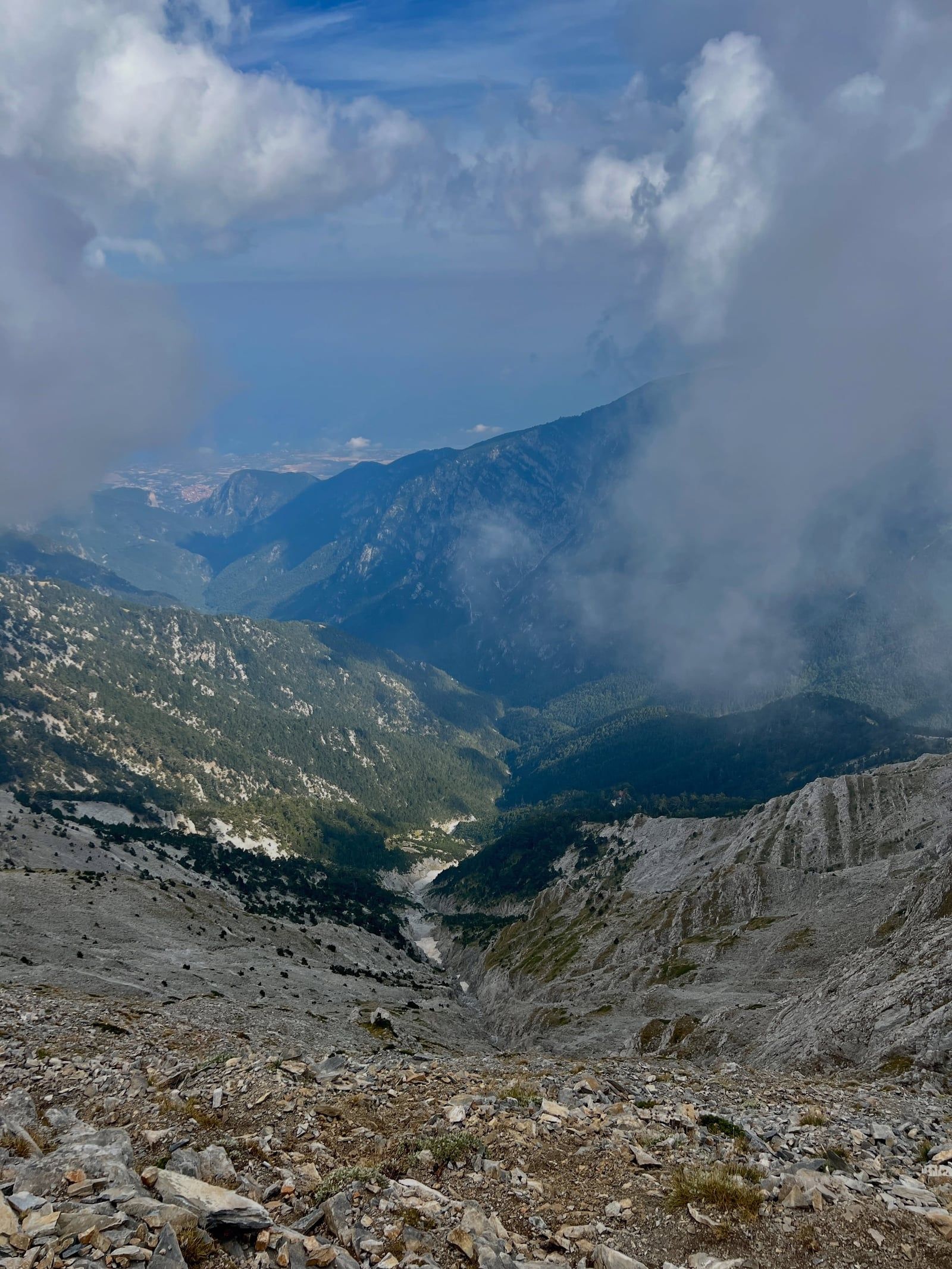
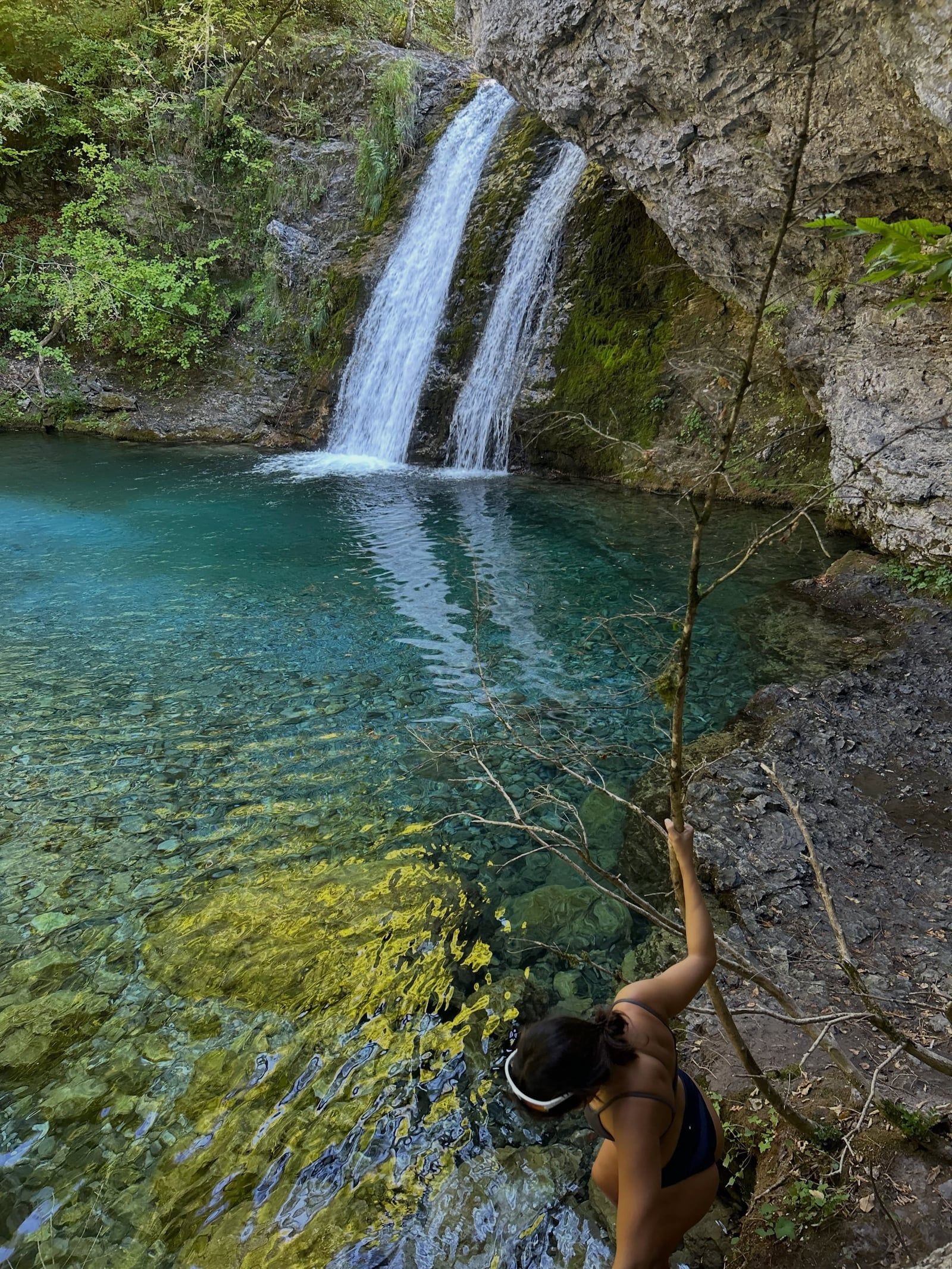
This half-day walk from Litochoro follows the Enipeas river through shady forest, past waterfalls and wooden footbridges. In summer, hikers cool off in the natural pools below the falls. Homer called these the mountain's 'mysterious folds'. It's the best Olympus trip you can do without an early alarm.
At the mountain's foot lie the sanctuaries, Hellenistic theatre and mosaics of Dion, where King Archelaus held nine days of games for Zeus around 400 BC. The adjacent museum displays finds including an ancient hydraulis organ. Entry is €10, €5 reduced — about 20 minutes by car from Litochoro.
Book a Dion day trip from Thessaloniki or a guided hike up Mytikas (2,918 m) — most tours cancel free up to 24 hours ahead.
Swipe to see more
 Free Cancellation 10h
 Free Cancellation 13h
 Free Cancellation 5h
 Free Cancellation 4h
Aim for June to September, when the trails are snow-free, the refuges are open, and the weather holds — September is the sweet spot with mild air, clear views, and fewer hikers on the paths. Avoid November through April, when the upper mountain is in full winter condition with avalanche danger.
The massif sheds snow slowly — May and even June can hold icy patches on the Mytikas scramble, and high refuges stay shut until mid-May. Late spring works for lower gorge walks, but pack for cold alpine nights.
Snow-free trails, open refuges, and the most stable weather of the year, though July and August bring crowds and sudden afternoon thunderstorms — start summit pushes before dawn to be off the peaks early.
September delivers mild temperatures, clear air, and thinner trail traffic. It doesn't last: refuges close in late October, and by early November the upper mountain is in full winter condition with avalanche danger.
Full winter on the massif — snow-buried trails above the treeline, closed high refuges, and steep gullies loaded with avalanche-prone snow. Crampons, ice axe, and rope are mandatory; experienced mountaineers only.
The mountain itself never closes — Olympus National Park has no gate and is open to the public year-round, at any hour. The services on it keep their own schedules. Spilios Agapitos Refuge (Refuge A, at 2,100 m) operates daily from mid-May to late October, usually 8 May to 28 October, from 06:00 to 22:00; the restaurant serves until 21:00 and guests must check in by 20:00. The Olympus National Park Information Center in Litochoro is open daily 09:00–16:00, last entry 15:45. The Dion Archaeological Park & Museum, about 20 minutes from Litochoro at the mountain's foot, opens Wednesday through Monday 08:00–20:00 in summer; from 1 November to 15 April it runs 08:30–15:30, and it closes on Tuesdays and Wednesdays in winter.
| Category | Price |
|---|---|
| Mount Olympus & Olympus National Park access | Free — no gate, no entrance fee, open at all times |
| Spilios Agapitos Refuge (Refuge A) — bed, non-members | €18.00 per night |
| Spilios Agapitos Refuge (Refuge A) — bed, mountaineering-club members with authenticated ID | €13.00 per night |
| Spilios Agapitos Refuge (Refuge A) — children up to 13 | €10.00 per night |
| Spilios Agapitos Refuge (Refuge A) — camping, non-members | €8.00 |
| Spilios Agapitos Refuge (Refuge A) — camping, members | €5.00 |
| Spilios Agapitos Refuge (Refuge A) — use of facilities for non-residents | €3.00 |
| Dion Archaeological Park & Museum — full admission | €10.00 |
| Dion Archaeological Park & Museum — reduced admission | €5.00 |
No permit is needed to hike, but a night at Refuge A requires advance booking — by phone at (+30) 23520 81800 or via the online reservation form, with a deposit for weekend stays and large groups. Its 110 beds fill up in July and August, so book early. The refuge supplies three blankets and a daily-changed pillow but no sheets, so bring a sleeping-bag liner. Note also that the refuge closes for winter in late October, when the upper mountain enters full winter condition until roughly May.
For complete schedules and ticket prices, visit our Hours & Fees page.
Nearly everyone arrives through Litochoro, roughly 92 km from Thessaloniki — about 1 hour 10 minutes by hourly Hellenic Train (€9) or 1.5 hours by car on the A1/E75. From Litochoro, the sealed 18 km road ends at Prionia, the highest point reachable by car and the usual starting point for summit routes.
📍 Mount Olympus has no street address. The mountain massif lies on the border between Thessaly and Macedonia, about 80 km southwest of Thessaloniki; the gateway town is Litochoro, from which the paved 18 km road climbs to the Prionia trailhead at 1,100 m.
Hellenic Train services leave Thessaloniki's New Railway Station roughly every hour along the coastal line, covering the 92 km in about 1 hour 10 minutes for €9 one-way. Note the catch: Litochoro station sits 6 km from the town, next to the sea, so budget another 5 minutes by taxi to reach the village centre. Trains run often enough that you don't need to book your day around them.
KTEL intercity buses depart Thessaloniki's Macedonia Intercity Bus Station (city bus 12 gets you there for €1) and run via Katerini, where you change to the Litochoro service. The full 92 km takes about 2 hours 15 minutes and costs around €10. Unlike the train, the bus drops you right in the village centre — no 6 km taxi hop at the end.
Drive the A1/E75 south towards Athens and exit for Litochoro — 92 km, about 1 hour 30 minutes, plus standard motorway tolls. The real advantage comes after town: an 18 km paved road climbs to Prionia at about 1,100 m, the highest point reachable by car and the main trailhead for summit routes. There's no entrance fee for the park or the mountain itself.
Thessaloniki's Macedonia Airport (SKG), about 110 km away via the city, is the closest airport. City bus line 78 (€0.90) or a taxi (€20-25) connects to the railway station, where trains for Litochoro run almost hourly. Door to door, expect about 2 hours 15 minutes. Skip any thought of landing closer — there is no nearer option.
For detailed transport options and routes, visit our Directions page.
Spilios Agapitos at 2,100 m has only 110 beds and they fill fast in July and August. Call (+30) 23520 81800 or use the online reservation form; weekends and groups require a deposit. Before setting out, check the refuge's live web camera and bed availability so you're not climbing toward a full house.
The refuge provides three wool blankets and a daily-changed pillow, but no sheets, so bring a liner or disposable sheets plus a towel and toiletries. You'll also need slippers or indoor shoes — everyone must change out of hiking boots at the door. A headlamp helps for late-evening trips down the hall.
July and August afternoons bring thunderstorms that build within minutes, and lightning is a real hazard on the exposed peaks. Most hikers leave Prionia at 7:00 or earlier with headlamps to be off the upper mountain in time. Watch cloud build-up over the massif and be ready to turn back from Skala.
An 18 km paved road climbs from Litochoro to Prionia at 1,100 m, the highest point reachable by car and the main trailhead. Local taxis cover it, saving the 4.5 km forest climb for your summit push. That leg still takes roughly 3 hours to Refuge A, so fresh legs matter.
Bring at least 2 litres of water per person for the Prionia-Refuge A climb, plus high-carbohydrate snacks — keep lunch light, since heavy meals sap energy at altitude. Refuge A enforces a strict carry-out litter policy: bins exist only at Prionia, so every wrapper and tin goes back down in your pack.
The exposed scramble from Skala to Mytikas crosses smooth, loose rock with real fall potential — leave children off it. Families do well on the Enipeas Gorge walk and around Prionia (supervision is required by park rules), and Refuge A charges kids up to 13 just €10 a night, so a family overnight is realistic.
The sacred Macedonian city dedicated to Zeus at the mountain's foot, flourishing from the 5th century BC to the 5th century AD. Walk sanctuaries, a Hellenistic theatre and mosaics; the museum displays finds including an ancient hydraulis organ. Entry €10, €5 reduced.
A Crusader fortress built between 1204 and 1222 on a hill above the Aegean. Its well-preserved walls and towers give sweeping views of both the sea and the Olympus massif, and it has guarded the coast from Byzantine times through World War II.
A restored stone village on Olympus's lower slopes, often called the most photogenic village on the mountain. Taverna terraces look out over the Olympus Riviera, Platamon Castle and the Aegean — best before sunset.
Read what travelers share about their experience visiting Mount Olympus — from practical tips to personal highlights.
Planning advice, comparisons, and practical tips.
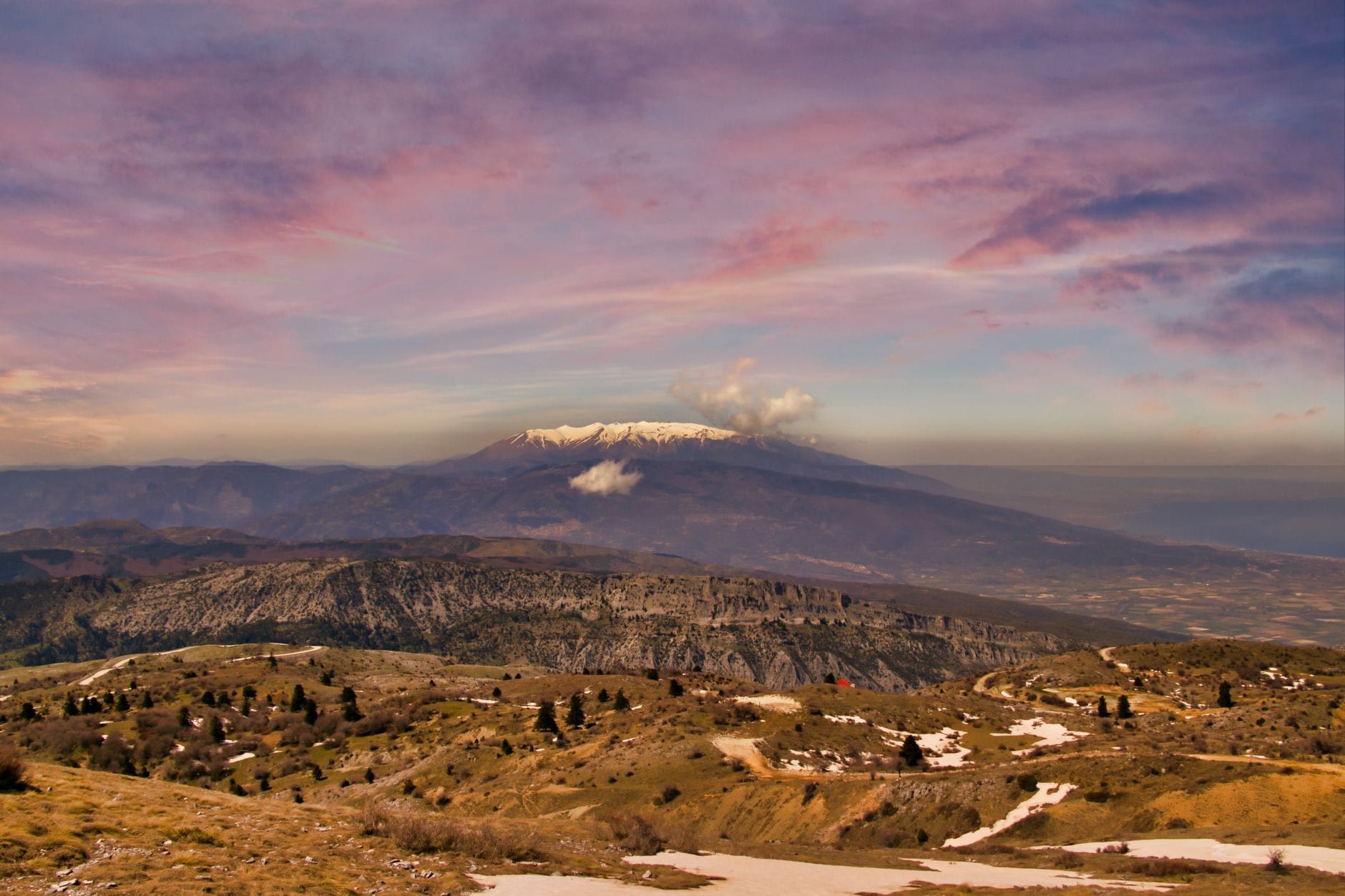
Yes, you can see Mount Olympus on a day trip from Thessaloniki — but only its lower half. Litochoro, the Dion archaeological park, the Enipeas Gorge…
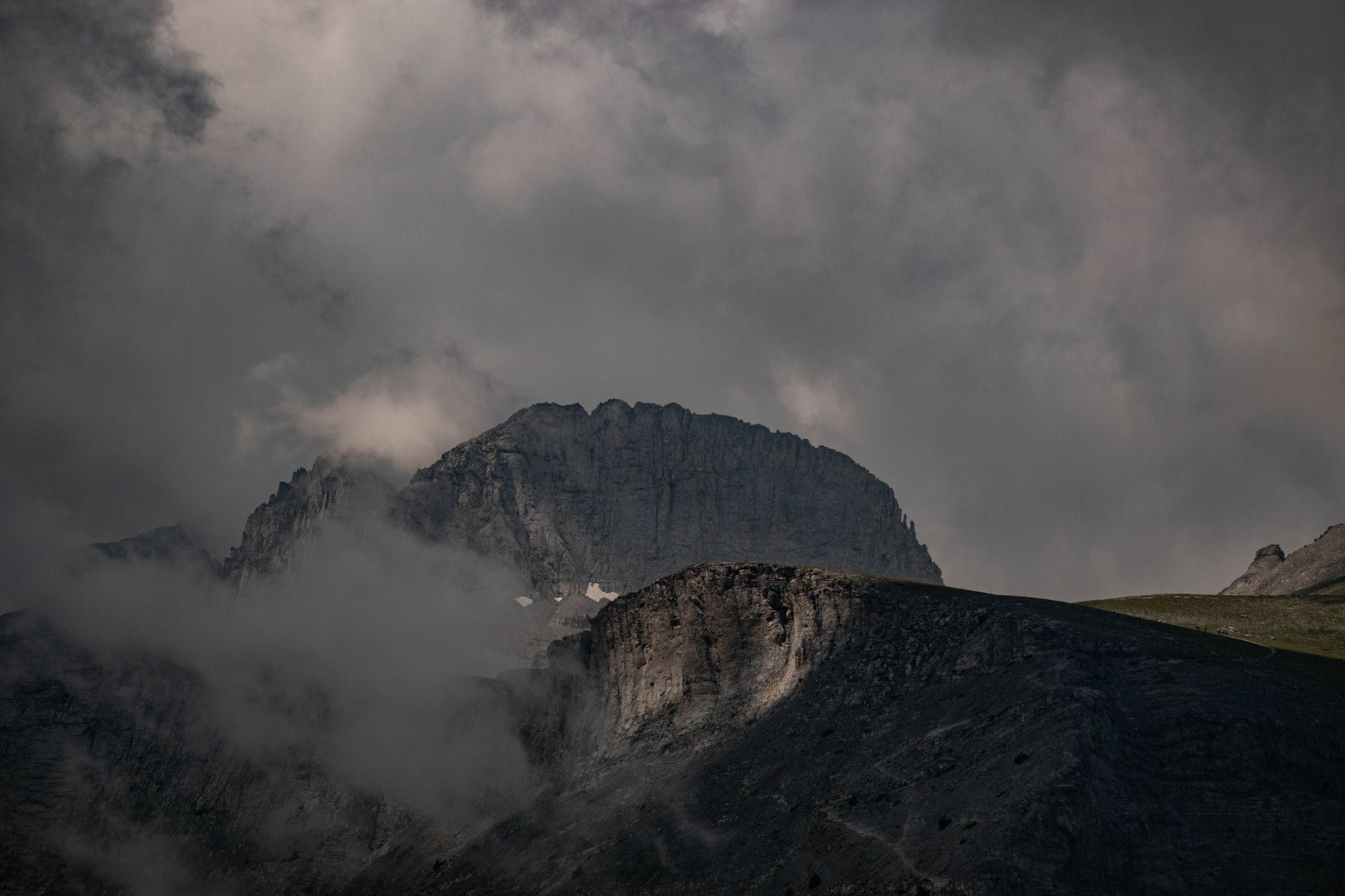
Climbing Mount Olympus takes two days, one night in a mountain refuge, and roughly seven hours of walking from the Prionia trailhead to the highest…
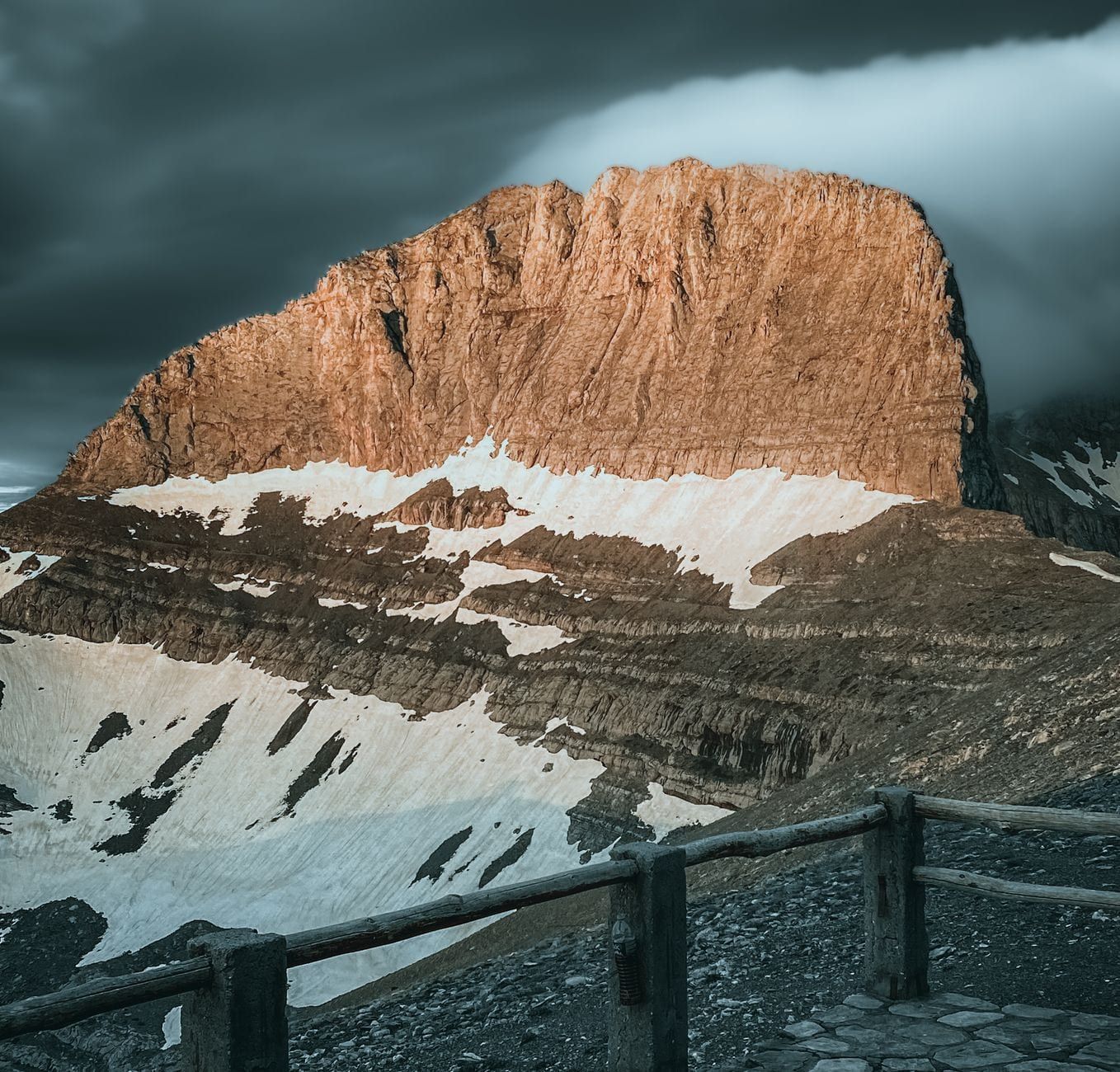
Mount Olympus sits just over 400 km north of Athens — close enough that a day trip works, far enough that it will consume 12 to 13 hours of your…
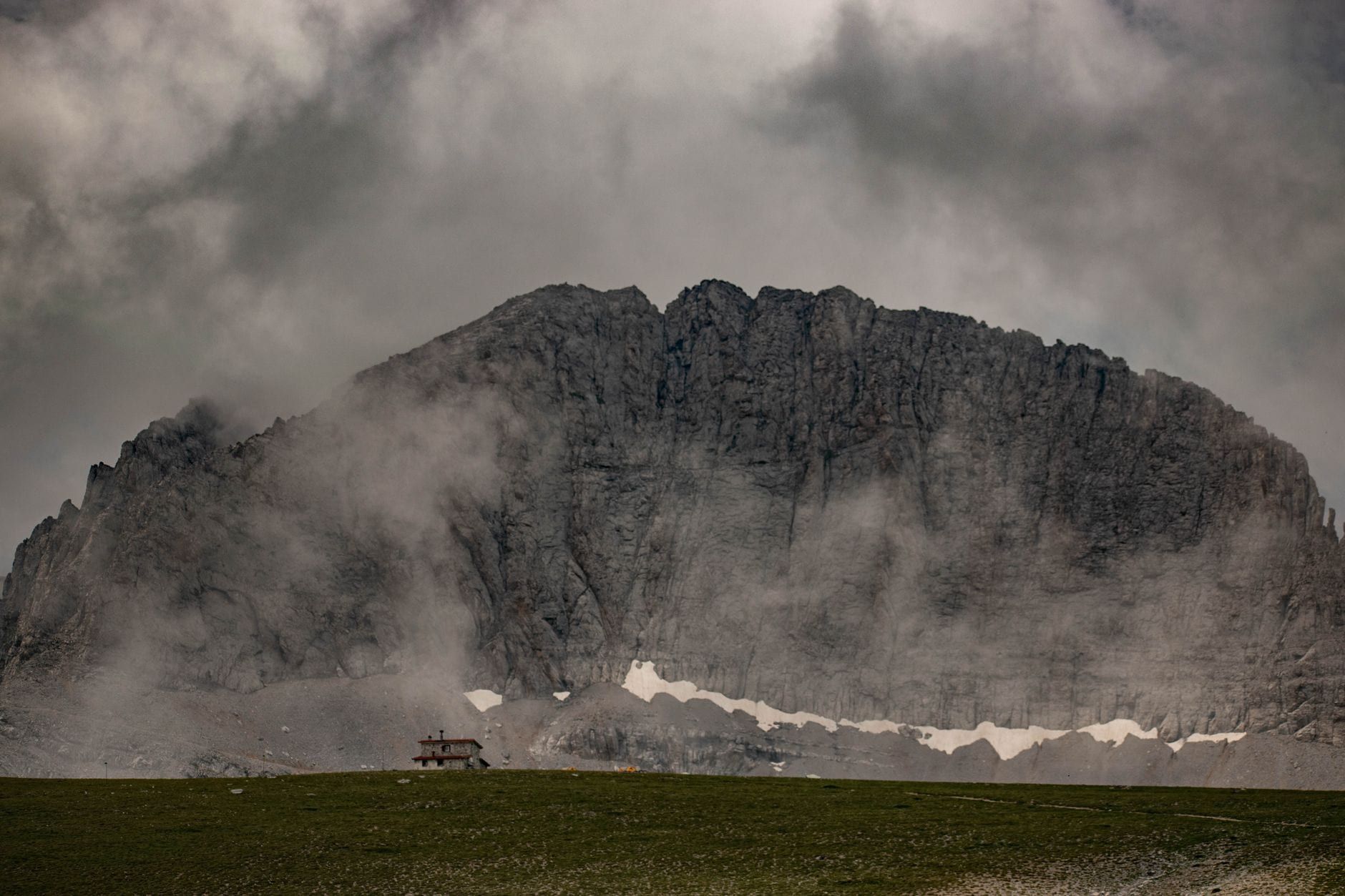
Mount Olympus is the highest mountain in Greece — Mytikas tops out at 2,917 m — and most fit hikers can stand on it with nothing more technical than…
Nothing to enter — the mountain and Olympus National Park are free and open at all times, with no gate or ticket. You only pay for services: a bed at Spilios Agapitos (Refuge A) at 2,100 m costs €18 for non-members (€13 for mountaineering-club members, €10 for children up to 13), and the Dion Archaeological Park & Museum charges €10 full or €5 reduced.
Yes, if you're fit. Start from Prionia (1,100 m) at 7:00 or earlier with a headlamp, reach Refuge A in roughly 2.5 hours, then allow about 2 more hours to Skala before the final scramble to Mytikas — a 10-12 hour round trip. Most hikers split it into two days with a night at Refuge A instead.
September, for most people — mild temperatures, clear air, fewer hikers, and refuges still open. June through September works overall; in July and August afternoon thunderstorms build fast, so you need to be off the upper peaks by early afternoon. From November to April the upper mountain is in full winter condition with avalanche danger, so skip it unless you're an equipped winter mountaineer.
The Hellenic Train from Thessaloniki's New Railway Station runs roughly hourly to Litochoro for about €9 and takes 1 hour 10 minutes; the station sits 6 km from the village, with a 5-minute taxi hop into town. The KTEL bus via Katerini costs about €10 and takes 2 hours 15 minutes. Driving covers the 92 km in about 1.5 hours, then an 18 km paved road climbs from Litochoro to Prionia at 1,100 m.
At least 2 litres of water per person for the Prionia-to-Refuge-A climb, plus high-carbohydrate snacks, hiking boots, waterproofs, warm layers (alpine nights are cold even in July), and a headlamp. If you're staying at Refuge A, pack a sleeping-bag liner and towel — the refuge provides three blankets and a pillow but no sheets, and you must change into indoor shoes when you enter.
Call Spilios Agapitos (Refuge A) at (+30) 23520 81800 or use their online reservation form — the 110 beds fill up in July and August, so book well ahead. Weekend stays and large groups require a deposit. Higher up, the Giosos Apostolidis (2,697 m) and Christos Kakkalos refuges sit on the Plateau of the Muses for summit attempts.
Partly. The Enipeas Gorge walk and the Prionia area suit families, children up to 13 pay only €10 a night at Refuge A, and park rules require supervised kids throughout; the exposed final scramble to Mytikas is not for children. Fit seniors can manage the 4.5 km, roughly 3-hour climb from Prionia to Refuge A, though the Mytikas scramble isn't recommended for them either.
The mountain trails aren't — they're rocky forest and alpine paths with no paved routes. Wheelchair users can drive the paved 18 km road from Litochoro to Prionia at 1,100 m, and visit the flat, town-level Olympus National Park Information Center in Litochoro (open daily 09:00-16:00) and the museum setting at Dion.
Browse verified tours with free cancellation and instant confirmation.
Find Tours


